
What a Medical Herbalist's Website Needs to Look Credible to a Skeptical Visitor

There is a particular kind of visitor who lands on a Medical Herbalist's website. They have a health concern, probably a long-standing one. They have tried some things. Those things have not fully worked, or they have worked but with side effects they would rather not live with, or they have produced a partial answer that leaves a significant gap. So they are looking, with genuine openness, for something different.
And yet — and this is the thing most herbalist websites miss — they are also skeptical.
They do not know what Medical Herbalism is. They have associations from the word "herbal" that may or may not be accurate: supplements, wellness influencers, the vague and unregulated end of natural health. Some part of them wonders whether they are considering something serious or something that is simply adjacent to serious things.
The website has to answer that question. Not later, not on the qualifications page, not buried in an FAQ. In the first few seconds, before the visitor has read a paragraph of copy.
Here is what needs to be on a Medical Herbalist's website, and why, in the order that a sceptical visitor needs to encounter it.
Lead with the problem, not the practice
The single most common mistake I see on herbalist websites is opening with a description of what Medical Herbalism is, or with the practitioner's philosophy, or with a statement about the healing power of plants. All of those things matter. None of them is what a sceptical visitor needs to read first.
What they need to read first is their own situation, accurately reflected back to them.
"You have been managing this for years. You have followed the advice you were given. And something is still not right." That kind of opening does not require the visitor to already trust the discipline. It only requires them to recognise themselves. And the moment they do, the site has their attention in a way that no amount of herbal philosophy would have achieved.
When I worked with Dr. Rosarie Kingston, a Medical Herbalist with a doctoral-level training in Ireland, this was one of the most important structural decisions on her site. Her clients often arrive with complex, chronic health concerns that have gone unresolved through conventional routes. They need to feel that the person they are about to consider working with understands what that experience is actually like. Not just the clinical picture. The human experience of carrying something unresolved for a long time.
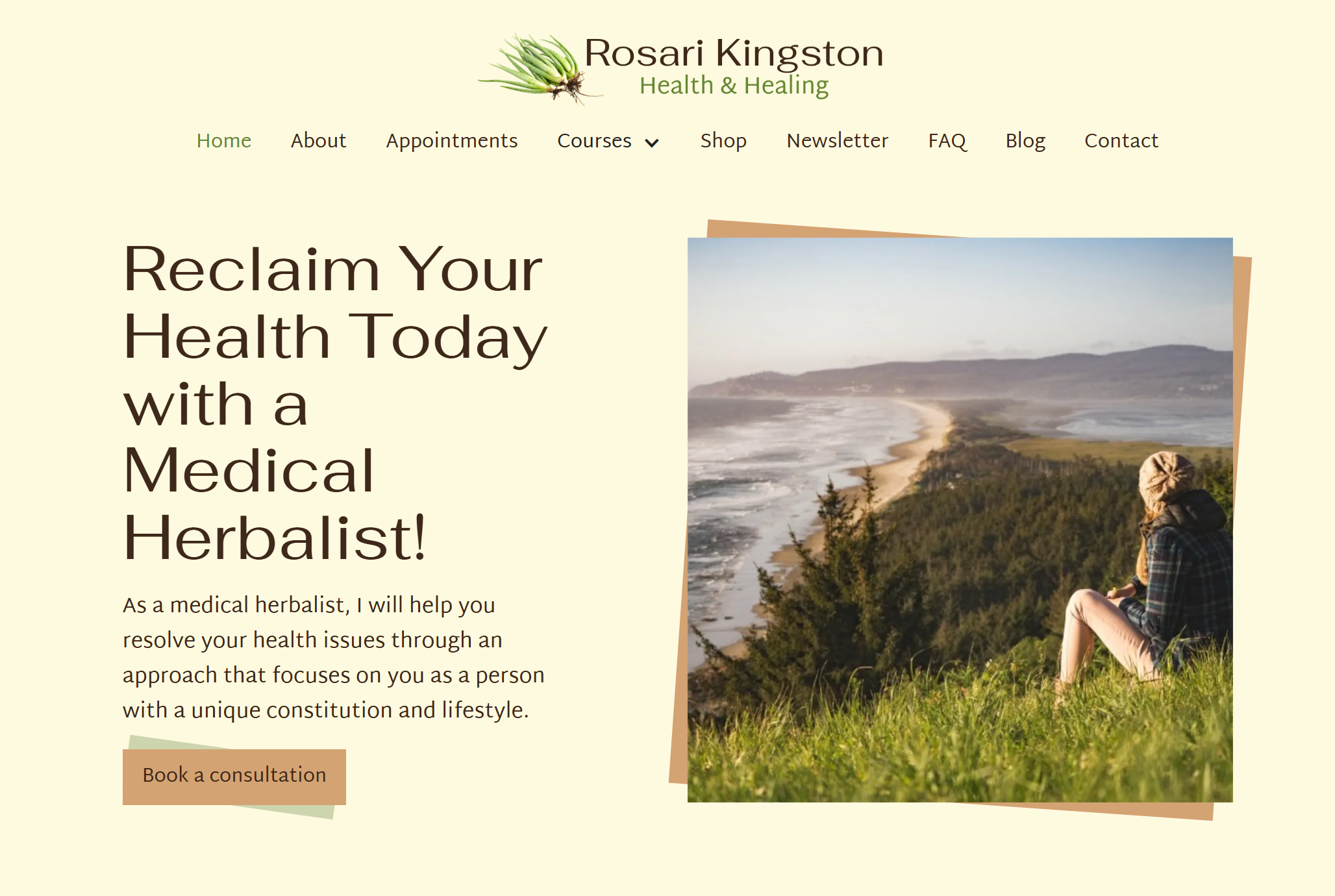
Get that right and everything else on the site becomes easier to read. The credentials feel earned, not defensive. The approach feels rigorous, not esoteric. The process feels clear, not daunting.
Make the qualification legible, not just impressive
Medical Herbalism is a regulated profession with a structured educational pathway. Doctoral-level training, clinical hours, registration with a professional body. The problem is that most visitors do not know this. The word "herbalist" does not carry the same automatic weight as "GP" or "surgeon." The website has to bridge that gap.
The wrong way to do this is to list every qualification and accreditation in a block of text that means nothing to someone outside the field. The right way is to translate the qualification into what it means for the patient.
"Doctoral-level training in herbal medicine, including clinical training in diagnosis, prescribing, and patient assessment" means something specific. So does "Member of the National Institute of Medical Herbalists" — but only if you also explain what that registration means in terms of standards, accountability, and ongoing professional development.
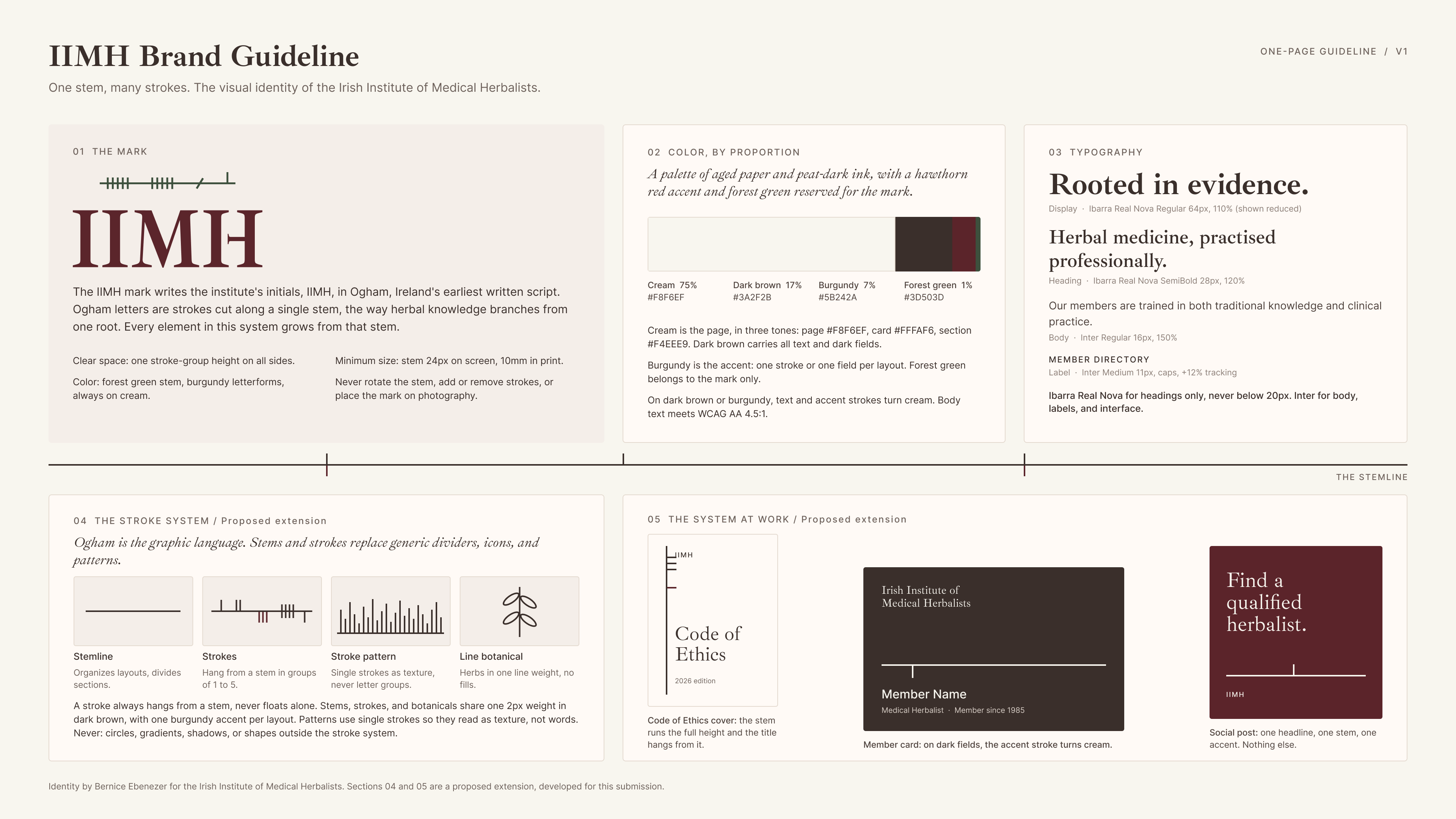
The visitor you are writing for is not a medical colleague who will understand the nomenclature. They are someone who has been carrying a health concern and is trying to decide whether this practitioner is genuinely qualified to help them. Write for that person, and let your qualifications make the argument they are capable of making.
Address the scepticism directly, briefly, and without defensiveness
There is a temptation, when building a website in a discipline that is sometimes misunderstood, to over-explain. To write three paragraphs defending the evidence base. To address every possible objection before the visitor has formed one. That impulse comes from a good place and produces poor copy.
Scepticism does not need to be argued away. It needs to be acknowledged and then moved past.
One clear, confident paragraph that says something like: "Medical Herbalism is a regulated, evidence-informed discipline. It does not replace conventional medicine. What it offers is a different lens on health, one that considers the full picture of what a person is experiencing rather than treating a single symptom in isolation." That says what needs to be said. It does not protest too much. And it does not waste the visitor's time.
Rosarie's site had to thread this needle carefully. The people most likely to benefit from working with her were often people who had already been through conventional routes and found them incomplete. They were not hostile to conventional medicine. They were looking for something complementary. The copy had to honour that experience rather than positioning Medical Herbalism in opposition to the system those visitors had come from.
Show who you have helped, and how
Testimonials and case studies do more work on a Medical Herbalist's website than almost anywhere else. The reason is that the discipline is unfamiliar to most visitors, and the most direct way to bridge unfamiliarity is through a recognisable story.
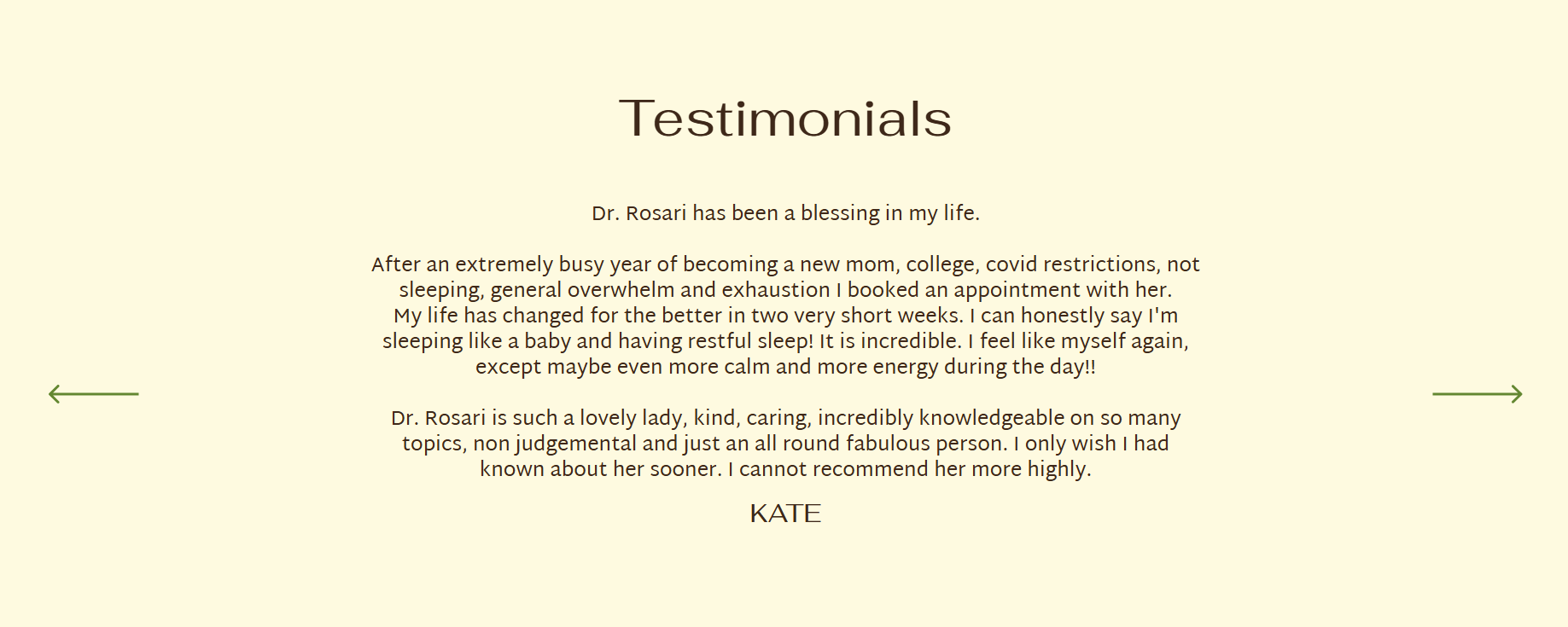
A testimonial that says "I felt genuinely heard for the first time" is valuable. A testimonial that says "I had been managing this for four years, and within three months of working with Rosarie, something actually shifted" is considerably more valuable. It is not just a positive review. It is evidence that the thing works, expressed in the language of someone who had the same scepticism the current visitor is carrying.
Privacy considerations matter here, as they do for any health practitioner. First names, with permission, and a general description of the concern rather than a full clinical picture, is usually the right approach. What matters is that the story is real and that it speaks directly to the experience of the person reading it.
Be clear about who you work with, and what to expect
Ambiguity on a Medical Herbalist's website creates two problems. The first is practical: visitors do not know whether their concern is something you see. The second is psychological: ambiguity reads as either inexperience or disorganisation, neither of which helps a sceptical visitor decide to reach out.
Be specific about the kinds of concerns you see. Not an exhaustive list, but enough that someone landing on the site can answer the question: does this practitioner work with people in my situation? Be equally clear about what the first appointment involves, how consultations are structured, and what the typical journey looks like. A visitor who understands the process before they reach out is a visitor who is far more likely to reach out.
For Rosarie, this also meant being clear about location and remote options. Some of her clients could attend in person. Others consulted remotely. Both options needed to be clearly signposted, because the right answer for a visitor's situation is not the same as the right answer for everyone.
Design that matches the rigour of the practice

The visual design of a Medical Herbalist's website does a significant amount of work that copy alone cannot do. A site that looks like a wellness blog — soft colours, script fonts, stock images of botanical ingredients — signals one thing about the practice. A site that feels considered, precise, and professionally built signals something quite different.
This does not mean a Medical Herbalist's website should look clinical or cold. The warmth of the work is part of the offer. But warmth and rigour are not in tension. A site can feel approachable and professional at the same time, and finding that combination requires careful, intentional design rather than a template that defaults to one or the other.
I build practitioner websites on Webflow specifically because of the level of design control it gives me. The typography, the spacing, the way the page breathes as you scroll — all of it contributes to the impression a visitor forms before they have consciously processed anything. For a discipline that carries an image challenge, those details are not cosmetic. They are part of the credibility argument.
If your herbalist website is not earning the trust it should
The same website that works for a GP will not work for a Medical Herbalist, because the trust gap is different. A GP's patients arrive with institutional trust pre-established. A Medical Herbalist's clients arrive with something more complex: genuine openness, and genuine uncertainty. Both need to be met.
My free Practitioner Website Checklist is a practical starting point for reviewing whether your site is doing this well — whether it is making the right first impression, presenting your qualifications in a way that is legible to a non-specialist, and giving visitors a clear and low-friction path to reaching out.
If you would like a more detailed assessment, my website audit covers exactly this: what is and is not working on your current site, with specific recommendations rather than a general framework.
And if you are at the point of thinking about a proper rebuild, book a discovery call and we can talk through what your practice needs.
Trust is not a design choice. It is built through every decision on the page, in the right order. Getting that right is the work.
View other interesting posts


If your expertise has outgrown your online presence, let's talk.
A short call — no pitch, no pressure. I will ask about your work and tell you honestly whether I think I can help.
