
Why AI Can't Replace a Specialist Web Designer (And What It Actually Can Do)
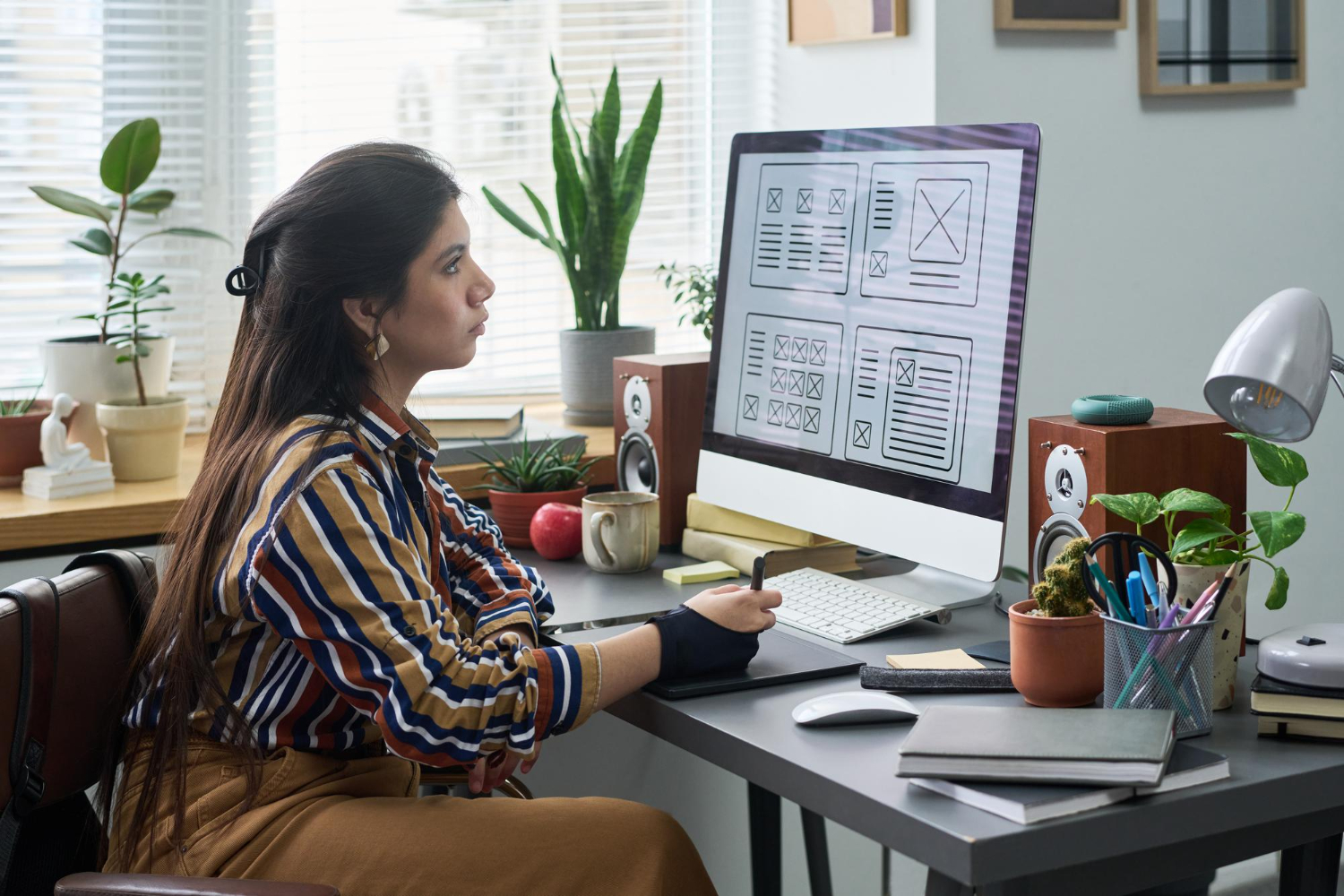
If you have been looking into getting a new website recently, you have almost certainly come across the pitch. AI can build your website in minutes. Just answer a few questions, pick a style, and you are done.
It is a compelling offer. And for certain kinds of websites, it is a reasonable one.
But if you are a specialist physician, an independent consultant, a practitioner in private practice, or any kind of expert whose work requires trust before a client will commit, that pitch is missing something important. Several things, actually.
This post is an honest look at what AI tools can do well, where they fall short for specialist clients, and why the difference matters more than most people realise.
What AI website tools can actually do well
Let us start with what is genuinely impressive, because dismissing AI entirely is not accurate or useful.
AI tools can generate a visually coherent layout very quickly. They can produce page structures that look professional, select a reasonable colour palette, suggest typography pairings, and give you something that resembles a complete website in a fraction of the time it would take to build from scratch.
For a business that needs a basic online presence, has a broad audience, and does not depend heavily on nuanced trust signals to convert visitors into clients, that is a real and legitimate solution. A local restaurant. A straightforward e-commerce store. A simple portfolio for a creative who wants to show their work and nothing more.
AI is also increasingly useful as a tool within a design workflow, for generating first drafts of copy, exploring layout variations quickly, or processing ideas at speed. I use AI tools in my own work. They are good at certain things.
The problem is not what AI can do. It is what people assume AI can do for briefs it is not built for.
The context problem
Every AI website tool works from a template logic. It takes the information you give it, matches it against patterns it has learned from, and produces something that resembles a website for a business like yours.
The word "resembles" is doing a lot of work in that sentence.
A website for a specialist practice is not built from pattern-matching. It is built from understanding. Understanding your patients or clients specifically. Understanding how they search, what they are afraid of, what questions they are asking themselves before they decide to reach out, and what they need to feel before they will trust you with something important.
That understanding does not come from answering a few questions in an AI interface. It comes from a designer who takes the time to learn your world before they start building in it.
Where specialist practices fall through the gap
Think about what a spine surgeon's website actually needs to do. The patients arriving at that site are often in chronic pain. Many of them have seen other doctors and not found an answer. They are not casually browsing. They are making a considered, somewhat desperate decision about who to trust with something that has been affecting their quality of life for months or years.
An AI-generated website for a spine surgeon will look like a spine surgeon's website. It will have the right sections, roughly the right language, and a professional enough appearance. But it will not know that the surgeon's dual-fellowship training is a genuinely unusual distinction that changes how patients should think about their options. It will not know how to make highly technical procedural information legible to someone who is frightened and in pain. It will not know which trust signals matter most in that clinical context, or how to structure the patient journey from first search to booked appointment.
I wrote about exactly this in my post on what a spine surgeon's website actually needed. The difference between what an AI tool would have produced and what the project actually required was not a matter of aesthetics. It was a matter of understanding.
The same is true for pain management specialists, medical herbalists, psychologists, independent consultants, and any other expert whose client is making a high-stakes, deeply personal decision. The website is not the finishing touch on the business. It is often the first real test of whether someone trusts you enough to take the next step.
What a specialist needs that AI cannot provide
A specialist's website needs to answer questions the client has not asked out loud yet. It needs to address the hesitation before the hesitation is expressed. It needs to communicate not just what you do, but why you are the right person to do it, in a way that is specific enough to resonate with exactly the right person and broad enough not to exclude anyone who should be there.
That requires a designer who has done the work of understanding your field. Who knows the difference between how a physician thinks about their own speciality and how a patient searches for help with a condition. Who understands that content structure is a clinical decision as much as a design decision for a medical practice website. Who can build an architecture that serves the practice today and grows with it over the next five years without requiring a rebuild.
I wrote more about this distinction in my post on the difference between a generalist and a specialist web designer. The point there applies equally to AI tools: pattern-matching produces a version of what you need. Understanding produces the real thing.
What AI is actually useful for in a specialist website project
This is not an argument against AI tools in general. It is an argument about where they fit.
In a well-run specialist website project, AI can help at specific points. Generating first drafts of content that a designer then shapes to the practice's voice and context. Exploring structural options at speed. Processing a large amount of existing content to identify gaps or inconsistencies. Producing variations for testing.
These are valuable contributions. But they are contributions within a process led by someone who understands what the project actually needs. The AI produces the raw material. The strategic thinking, the audience understanding, and the judgement about what will actually work for this specific client with this specific brief still requires a human.
I build on Webflow specifically because it gives me the precision to implement that strategic thinking exactly, from the technical SEO architecture to the CMS structure that lets a practice grow without involving a designer every time something changes. AI tools can generate a site that looks like it was built on Webflow. They cannot make the decisions that go into building a Webflow site that actually performs.
The question to ask before you decide
If you are weighing up whether an AI website tool is the right solution for your practice or business, the most useful question is not "can it build me a website?" It can. The question is: does the website it builds understand my clients well enough to convert them?
If your work is complex to explain, your clients are making a considered and often emotional decision, and a generic website would reflect badly on the quality and specificity of what you actually do, then an AI tool is going to give you a website that resembles what you need but does not do what you need it to do.
For independent professionals and specialist practitioners who need their website to work as hard as they do, that distinction matters a great deal.
If you want a website built around your specific practice
I work with specialist physicians, surgeons, independent consultants, allied health practitioners, and expert-led businesses who need more than a template, AI-generated or otherwise. I spend time learning your world before I touch a design tool, because a website that does not understand your clients cannot convert them.
If that is where you are, there are three ways to take this further.
Book a free discovery call. We talk about your practice and your website, and I tell you honestly what I think it needs. No pitch, no pressure. Book a call here.
Read about my work with specialist practitioners. The Dr. Andrew Chung case study and the specialist physician website post both go into detail on what this kind of work actually involves.
Take a look at my services. If you want to understand how I work before we speak, my services page covers the full picture.
Your website should work as hard as you do. An AI tool can give you something that looks the part. A specialist designer can give you something that does the job.
View other interesting posts


If your expertise has outgrown your online presence, let's talk.
A short call — no pitch, no pressure. I will ask about your work and tell you honestly whether I think I can help.
