
Why Every Freelancer's Website Needs an SEO Strategy (Even a Simple One)
Most freelancers build a website and then wait. They choose a font, write some copy, upload a few images, and hit publish. Then they check their enquiries the following week and wonder why nothing has moved.
The problem is rarely the design. It is usually that no one is finding the site in the first place.
Search engine optimisation sounds complicated, and a lot of the content written about it makes it feel that way. But for a freelance service provider, a basic SEO strategy does not need to be technical or time-consuming. It needs to be consistent, intentional, and built on a solid foundation.
Here is what that actually looks like.
SEO for freelancers is not about gaming Google
When most people think about SEO, they imagine keyword stuffing, backlink schemes, and technical tricks. That is not what I am talking about here.
For a solo expert or independent professional, SEO is simpler than that. It is about making sure that when someone searches for the thing you do, in the location or context you serve, your website has a reasonable chance of appearing. And that when someone does land on it, the page they find is clear, useful, and builds enough trust to make them want to reach out.
That is it. No tricks. Just relevance and credibility.
Start with the right platform
Before getting into content or keywords, it is worth saying that your SEO strategy is constrained by the platform your website is built on.
Some platforms make it difficult to control the things that matter for search. They generate slow page loads, messy code, or duplicate URLs that confuse search engines before you have even started.
I build on Webflow because it gives me precise control over every element that affects search performance. Clean semantic HTML, fast hosting, customisable meta tags, canonical URLs, structured redirects, and automatic sitemap generation. When a site is built properly from the start, SEO becomes a question of content and strategy rather than a constant fight against technical problems.
If your current platform is working against you, it is worth addressing that before investing time in anything else.
The basics that actually move the needle
A lot of SEO content online focuses on tactics. For a freelancer, the fundamentals matter more than any individual tactic.
Be specific about what you do and who you serve. A homepage that says "I help businesses grow" is impossible for Google to rank for anything meaningful. A homepage that says "I design websites for independent consultants and specialists in private practice" gives search engines something concrete to work with, and gives the right visitors a reason to stay. I wrote more about what to say on every page of your website if you want to work through this properly.
Create content that answers real questions. Blog posts, guides, and case studies help search engines understand what your work is about. They also give you something to share on social media and in newsletters. Over time, useful content compounds.
Make your site fast and easy to navigate. Page speed is a ranking factor, but more importantly, it affects whether visitors stay long enough to convert. A slow site loses people before they have read a word.
Use a clear heading structure. Every page should have a clear title, logical headings, and a focus. Search engines read your heading structure to understand what a page is about. So do humans.
None of this is complicated. But most freelance websites I look at are missing at least two or three of these fundamentals.
Know whether it is actually working
This is where most freelancers fall down. They make some changes, publish a few blog posts, and then have no idea whether any of it is having an effect. Six months later, they either double down on something that is not working, or they abandon something that was quietly gaining traction.
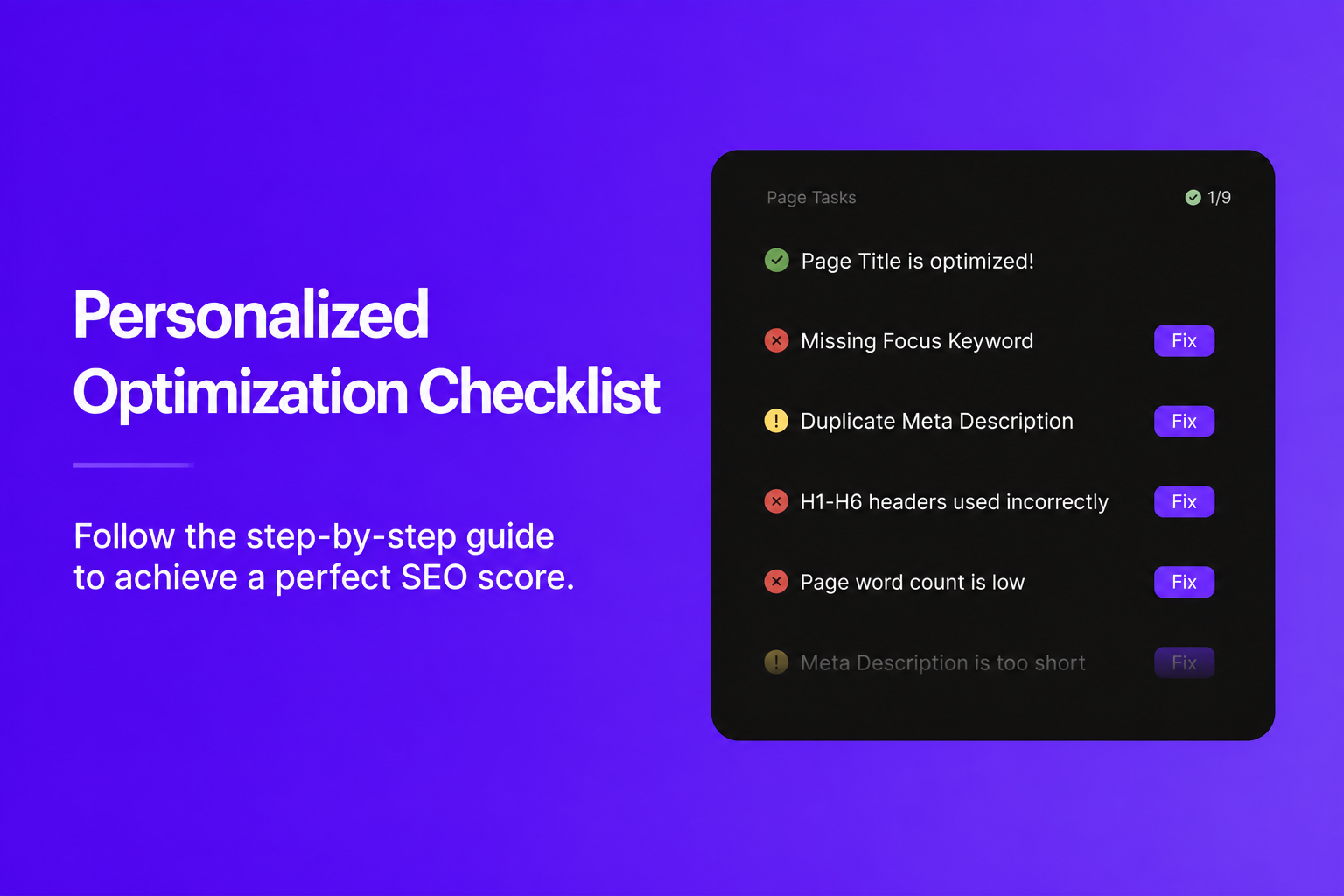
Tracking your search performance does not require an agency or a complicated setup. I use Semflow to keep an eye on how my site is ranking for the terms that matter to my work. It shows me which pages are gaining visibility, which keywords my content is being found for, and where there are gaps worth addressing. It is built for small businesses rather than large marketing teams, which means it surfaces the information I actually need without burying it in dashboards I do not understand.
If you want to know whether your SEO is working, you need something that gives you that visibility. Checking Google Analytics occasionally and hoping for the best is not a strategy.
Do not let SEO traffic disappear
One of the biggest missed opportunities I see with freelancer websites is that there is no system for keeping the people who visit.
Someone finds your site through a search. They read your blog post. They find it useful. And then they leave, and you never see them again.
An email list changes that. When a visitor joins your list, they stay connected to your work even after they close the tab. When they are ready to enquire, you are already familiar to them. I have written before about why your email list is your most valuable business asset if you want the full case for why this matters.
I use MailerLite to manage my newsletter and subscriber list. It is straightforward to set up, integrates cleanly with Webflow, and has everything a solo business needs at a price point that makes sense. A simple opt-in, a useful freebie, and a consistent email keeps the people who find you through search in your world until they are ready to take the next step.
The thing most freelancers forget entirely
There is one piece of website infrastructure that often gets skipped, and it matters more than most people realise.
Your legal pages.
A privacy policy, terms of service, and cookie policy are not optional if you are collecting data from visitors, running email sign-ups, or using tracking tools like Google Analytics. They are also something visitors increasingly notice. A professional website without a privacy policy can quietly undermine the credibility you are working to build.
I use Termageddon to keep my policies current. Termageddon generates and automatically updates your legal pages as laws change, which means you are not relying on a static document written three years ago that may no longer reflect current requirements. For a solo business owner, that peace of mind is worth a great deal.
A simple place to start
If you are not sure where to begin, here is a reasonable starting point.
Check that your homepage clearly states what you do and who you help. Make sure your site loads quickly on mobile. Write one useful piece of content each month that addresses a question your ideal client is likely to search for. Set up a simple email opt-in so that visitors have a reason to stay connected. And use a tool like Semflow to track whether any of it is gaining traction.
That is not a comprehensive SEO strategy. But it is enough to start building visibility without burning time on something that feels overwhelming.
SEO is a long game, but it is worth playing
Paid advertising stops the moment you stop paying. SEO compounds. A well-written article or a well-optimised services page keeps working long after it was published, without any additional spend.
For a freelancer or solo expert who does not have a large marketing budget, that matters. The investment is time, not money. And time spent building something that keeps working is more valuable than most other things you could be doing with it.
If you are not sure where your website currently stands, I offer website audits that look at exactly this. Or get in touch and we can talk through what your site needs.
View other interesting posts




If your expertise has outgrown your online presence, let's talk.
A short call — no pitch, no pressure. I will ask about your work and tell you honestly whether I think I can help.
